Proudly Serving the Phoenix Metro Area



Why Tree Roots Continue to Cause Sewer Problems Across Mesa
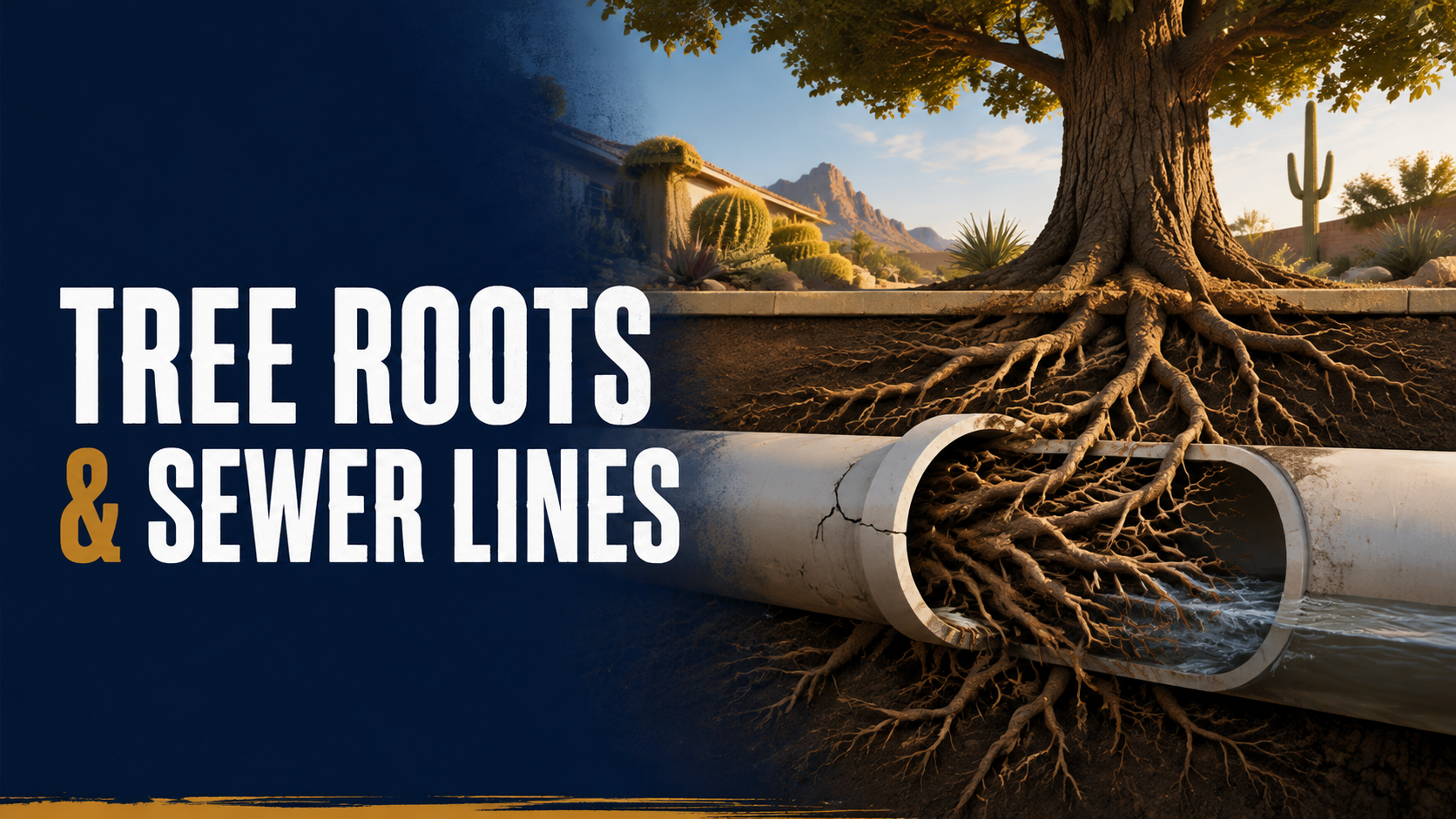
Tree roots are a recurring cause of sewer clogs and backups in Mesa because they can enter cracked, separated, or deteriorated sewer lines in search of moisture. Once roots reach the inside of a pipe, they may continue growing and collect waste, grease, and other debris until wastewater flow becomes restricted.
In this guide, you will learn why root intrusion happens, how to recognize the warning signs, and why clearing roots may not permanently solve the problem. Mesa homeowners who experience repeated main-line clogs should consider a sewer camera inspection before another backup causes water damage or sanitation concerns.
Why Are Tree Roots a Recurring Sewer Problem in Mesa?
Tree roots usually enter sewer pipes through an existing defect. Cracks, loose joints, failed seals, corrosion, and damaged connections can release moisture into the surrounding soil and create an opening for small roots.
Several conditions can contribute to recurring problems:
-
Mature trees growing near the sewer route
-
Wide-spreading root systems
-
Cracked or deteriorated pipes
-
Separated sewer joints
-
Irrigated landscaping near buried lines
-
Previous root clearing without pipe repair
-
Older sewer laterals with multiple defects
Removing roots can restore drainage, but it does not necessarily close the opening that allowed them inside. When the pipe remains damaged, roots may grow back and cause another blockage.
Why Do Roots Grow Into Sewer Lines?
Roots naturally grow toward areas where water, oxygen, and nutrients are available. A leaking sewer line can create favorable growing conditions in otherwise dry soil.
Very small roots may enter through narrow cracks or loose pipe joints. Once inside, they have access to a steady supply of moisture. The roots can thicken, spread along the pipe, and form a dense obstruction.
Wastewater materials can then collect around the roots, including:
-
Toilet paper
-
Grease
-
Soap residue
-
Food particles
-
Wipes
-
Hair
-
Other solid waste
This accumulation can reduce the pipe’s usable diameter and slow drainage throughout the home.
Roots do not need to break through a fully intact pipe to create a problem. They often take advantage of damage that already exists. Ground movement, age, corrosion, poor installation, and previous construction work can all create openings.
As the roots grow larger, they may place additional pressure on weakened joints or pipe walls. This can contribute to wider cracks, shifted connections, and more extensive damage.
Why Can Mesa Properties Be Vulnerable to Root Intrusion?
Mesa’s dry conditions can make dependable water sources especially attractive to plant roots. Irrigated lawns, trees, shrubs, and landscaping may create concentrated areas of moisture around underground utility lines.
Properties may face a higher risk when they have:
-
Mature trees near the home
-
Large shrubs close to the sewer lateral
-
Older clay, concrete, cast iron, or Orangeburg pipe
-
Repaired or patched sewer sections
-
Soil movement or settlement
-
Landscaping installed without considering utility locations
-
A history of recurring drain problems
The size of a tree’s canopy does not always show the full reach of its roots. Roots may extend well beyond the visible branches, depending on the species, soil, irrigation, and surrounding conditions.
Newer properties are not automatically protected from root intrusion. A newer sewer line can still develop problems if it was damaged during construction, installed incorrectly, or affected by shifting soil.
Homeowners should also avoid assuming that removing one tree will eliminate the risk. Roots from other trees or shrubs may still reach the same damaged pipe. The structural condition of the sewer line remains the central issue.
What Are the Signs of Roots in a Main Sewer Line?
Root intrusion often causes symptoms that affect several fixtures rather than one isolated drain.
Watch for:
-
Multiple drains slowing at the same time
-
Toilets gurgling when a sink or appliance drains
-
Water backing up into a shower or tub
-
Sewage odors inside or outside the home
-
Toilets that flush poorly
-
Recurring main-line clogs
-
Temporary improvement after plunging or cleaning
-
Unusually wet or green areas in the yard
-
Drain problems that steadily become more frequent
A single slow sink may have a local blockage in the fixture drain. When several fixtures are affected, the obstruction may be in the main sewer lateral.
The location of a backup can also provide clues. Wastewater that rises through a lower-level shower, floor drain, or tub may indicate that the main line cannot carry water away from the home.
These symptoms do not prove that roots are present. Grease, foreign objects, poor pipe slope, corrosion, or a collapsed section can cause similar problems. A professional inspection is needed to identify the actual cause.
When sewage backs up into the home, limit water use until the line has been evaluated. Running additional fixtures may increase the amount of contaminated water entering the property.
Why Do Sewer Problems Return After the Roots Are Cleared?
Root cutting and drain cleaning can remove an obstruction and restore flow. However, clearing the line does not automatically repair cracks, loose joints, or damaged pipe walls.
This distinction is important:
-
Clearing removes roots and debris from inside the pipe.
-
Inspection identifies where roots entered and shows the pipe’s condition.
-
Repair corrects the structural opening that allows intrusion.
A homeowner may notice immediate improvement after root removal. Drains flow faster, toilets stop gurgling, and the backup disappears. If the underlying defect remains, the roots may begin growing back.
The time required for a blockage to return varies. It depends on the size of the opening, nearby vegetation, moisture, pipe condition, and how thoroughly the roots were removed.
Repeatedly clearing the same line without evaluating the pipe may lead to ongoing service costs and continued backup risk. It can also allow the structural damage to worsen without being addressed.
Ask the plumber what the roots were growing through and whether the pipe can remain in service reliably after cleaning.
How Does a Sewer Camera Inspection Find Root Damage?
A sewer camera inspection allows a plumber to view the inside of the line. A waterproof camera is inserted through a cleanout or another suitable access point and guided through the pipe.
The inspection may reveal:
-
Root growth
-
Cracked pipe walls
-
Separated joints
-
Corrosion
-
Standing water
-
Debris buildup
-
Offset connections
-
Sagging sections
-
Partial collapse
-
Previous repairs
The plumber may also use locating equipment to identify the approximate position and depth of the damaged section.
A heavy blockage may need to be cleared before the camera can pass through the line. A follow-up inspection can then show the pipe after the roots and debris have been removed.
Camera footage helps determine whether the problem is limited to one joint or affects a longer section of pipe. This information is useful when comparing continued maintenance, spot repair, pipe lining, or replacement.
Homeowners should ask to review the findings and receive a clear explanation of what the inspection shows.
Can Tree Roots Be Removed Without Replacing the Sewer Line?
In some cases, roots can be removed without immediately replacing the pipe. Mechanical cutting or another appropriate drain-cleaning method may restore wastewater flow.
Clearing may be reasonable when:
-
Root growth is limited
-
The pipe remains structurally sound
-
Damage is isolated
-
The line still has acceptable slope
-
The blockage has not returned repeatedly
-
A repair can be planned for a later date
The cleaning method should match the pipe material and condition. Aggressive equipment can damage a line that is already badly deteriorated, so the pipe should be evaluated carefully.
Chemical root treatments should not be treated as a substitute for inspection. They may not reach the affected area evenly and cannot repair cracks or failed joints.
After clearing, ask whether another camera inspection is recommended. The post-cleaning view may provide the clearest information about the opening that allowed the roots to enter.
When Does a Root-Damaged Sewer Line Need Repair or Replacement?
Structural repair becomes more important when cleaning no longer provides dependable results or the pipe has significant damage.
Repair or replacement may be recommended when:
-
Roots return frequently
-
A pipe joint has separated
-
Large cracks are visible
-
A section has partially collapsed
-
Several areas are deteriorated
-
Corrosion has weakened the pipe
-
Wastewater remains trapped because of poor slope
-
Previous repairs have failed
-
Cleaning cannot restore normal flow
A localized defect may be suitable for a spot repair. More extensive deterioration may require replacing a longer section of the lateral.
Trenchless methods may be available in some situations. These approaches can sometimes reduce excavation, but eligibility depends on the pipe’s material, alignment, diameter, structural condition, and access points.
A fully collapsed or severely shifted pipe may still require traditional excavation. No single repair method is appropriate for every property.
The recommendation should be based on camera findings, not only on the fact that roots are present.
How Can Mesa Homeowners Reduce Future Root Intrusion?
The most effective way to reduce recurring root problems is to correct the pipe defect that provides access.
Helpful steps include:
-
Schedule a camera inspection when clogs return
-
Repair known cracks and separated joints
-
Keep records of cleaning and sewer repairs
-
Learn the approximate route of the sewer lateral
-
Avoid planting large trees directly over the line
-
Consider mature root spread before adding landscaping
-
Monitor wet or unusually green areas in the yard
-
Address gurgling and multiple slow drains early
-
Avoid flushing wipes and other clog-forming materials
-
Follow the plumber’s maintenance recommendations
Do not assume that routine root cutting is the only available solution. It may be part of a maintenance plan, but recurring intrusion usually means the line has an opening that deserves attention.
Tree removal is not always necessary or sufficient. Repairing the pipe may provide a more direct solution while allowing healthy landscaping to remain.
Who Is Responsible for the Sewer Lateral in Mesa?
The homeowner is generally responsible for the private sewer lateral that connects the property to the public sewer system. The city maintains the public sewer main.
The exact location of a blockage matters. A problem may be:
-
Inside the home’s drain system
-
In the private sewer lateral
-
Near the property connection
-
In the public sewer main
A sewer camera inspection and locating service can help identify where the defect is positioned.
Do not assume that the city or homeowner is responsible until the blockage location has been confirmed. When the evidence suggests a problem in the public main, contact the appropriate municipal department for guidance.
Stop Recurring Root Problems Before They Cause a Sewer Backup
Tree roots continue to cause sewer problems across Mesa because they enter through cracks, failed joints, and other defects in underground pipes. Cutting the roots may restore flow, but the blockage can return when the damaged opening remains in place.
Repeated slow drains, gurgling toilets, sewage odors, and main-line backups should be investigated before the problem becomes more disruptive. A camera inspection can locate root growth, show the pipe’s condition, and help determine whether cleaning, repair, or replacement is appropriate.
Plumbing Masters helps Mesa homeowners clear sewer blockages, inspect underground lines, and evaluate root-related pipe damage. When recurring drain problems point to possible root intrusion, contact us today to schedule service and protect your home from another sewer backup.
Recent News
What Causes Repeated Drain Clogs in Older Glendale Homes?
Slab Leak Repair or Repiping? What Phoenix Homeowners Should Do When an Underground Pipe Starts Leaking
Vintage Plumbing in Verrado vs. New Builds in North Peoria: What Every Homeowner Needs to Know
The Invisible Tax: How Phoenix Hard Water Shortens Your Water Heater’s Life by 40%
Monsoon Prep: Why Arizona “Slab Leaks” Spike After Heavy Rains
Gas Line vs. Electric Water Heater: Which Saves You More in Arizona?